
Pharmaceutical Technology Center Heads to German Pharma Hubs: Leading a Delegation to Explore Opportunities in the World’s Fourth-Largest Pharmaceutical Market
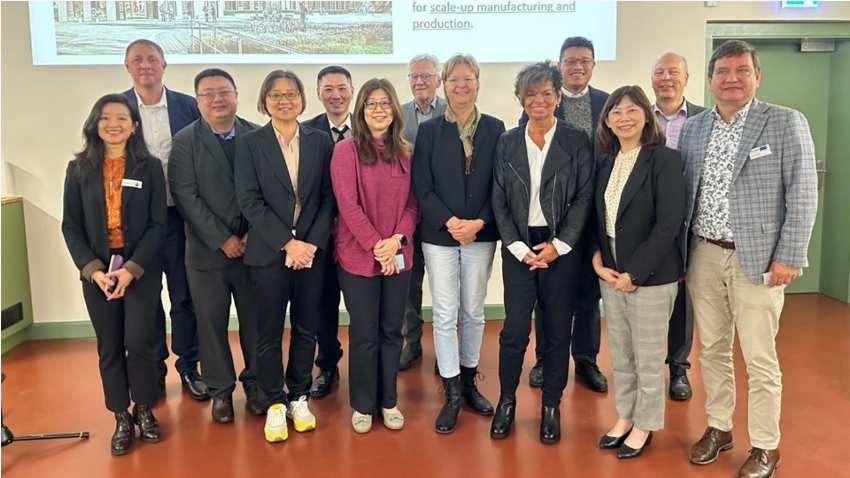
On October 23–24, the Pharmaceutical Industry Technology and Development Center (PITDC) led a delegation of Taiwanese pharmaceutical industry representatives on a visit to several life science and biotechnology hubs in the Berlin-Potsdam region, including the Chamber of Industry and Commerce (IHK) Potsdam, Biotech Park Luckenwalde, and the Life Science Cluster Hennigsdorf. The delegation was accompanied by Counselor Huang Ching-yun and Secretary Chiu Yi-chiao from the Economic Division of the Representative Office in Germany. During the visit, the two sides exchanged views on market positioning, regulatory frameworks, and pressing global issues such as recent pharmaceutical shortages and supply chain resilience. They also explored potential future collaborations in research and development, manufacturing, and industrial strategy.
Germany is the world’s fourth-largest pharmaceutical market. In recent years, the German government has actively promoted the biomedical industry chain; beyond focusing on key R&D and manufacturing capabilities, it has fostered technical connectivity among universities, research institutions, pharmaceutical companies, and startups—facilitated by research grants, cluster-based R&D centers, and industry-academia collaboration mechanisms—to accelerate the transition of new technologies toward clinical application and commercialization. The capital region, encompassing Berlin and Brandenburg, is now home to over 730 biotechnology, pharmaceutical, and medical technology companies. With its comprehensive network of academic research, clinical trial resources, and healthcare facilities, the region serves as a major hub for biomedical innovation in Europe. Notable companies established there include Bayer, B. Braun, Berlin-Chemie, Biotronik, Eckert & Ziegler, Pfizer, Sanofi, Takeda, and Thermo Fisher. Alongside these, a large number of small and medium-sized biotech firms—focused on niche R&D—contribute to an industrial ecosystem where major pharmaceutical corporations and startups coexist and complement one another.
The Berlin-Brandenburg Healthcare Cluster serves as a vital hub for life sciences and medical R&D. It brings together organizations and companies specializing in biopharmaceuticals, diagnostic technologies, experimental medicine, regenerative medicine, and industrial biotechnology. The cluster also functions as a platform for clinical trials and corporate collaboration, encompassing an end-to-end value chain that spans from R&D and manufacturing to clinical application. A delegation led by the Pharmaceutical Industry Technology and Development Center (PITDC) visited this cluster to gain insights into its operational structure—including its management model, pathways for corporate growth, and mechanisms for cross-border collaboration—providing a valuable reference for Taiwanese pharmaceutical and biotech companies as they evaluate potential expansion into the European market.
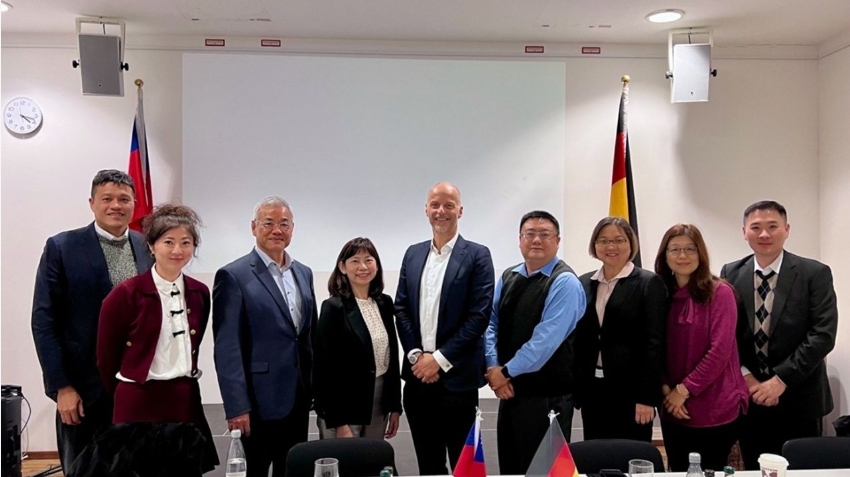
The delegation also met with Dr. Kai Joachimsen, Chief Executive Officer of the German Pharmaceutical Industry Association (BPI). The discussion covered the current state of the pharmaceutical markets in Taiwan and Germany, industry strategies, regulatory frameworks, and recent global challenges—specifically drug shortages and supply chain resilience. Insights were also shared regarding Germany’s institutional approaches to pharmaceutical supply, procurement policies, and the reshoring of production. The Center for Drug Evaluation (CDE) indicated that it will continue to monitor developments in Germany and the European Union concerning pharmaceutical policy, R&D support, and the operational models of industrial clusters. Furthermore, it will evaluate potential collaboration and market-entry opportunities for Taiwanese pharmaceutical and biotech companies, which will help guide future planning for international clinical trials, licensing partnerships, and supply chain integration.
Related Attachments
— Share —
Focusing on pharmaceuticals and medical devices, supplemented by health foods and medicated cosmetics, promoting technology development and services, dedicated to the development and internationalization of the pharmaceutical industry, enhancing industry competitiveness!
Contact Information
 Customer Service Phone : 02-6625-1166
 Customer Service Email : pitdc_p@pitdc.org.tw
 Company Address : 7th Floor, No. 9, Wuquan Rd., Wugu District, New Taipei City, 248
 Line Official Account :
Copyright © 2026 Medical and Pharmaceutical Industry Technology and Development Center All Rights Reserved.